

SCARCITY MINDSET EXPLAINED: SIGNS, PSYCHOLOGY, AND HOW TO OVERCOME IT - (CHAPTER 01)
- shoury01
- Apr 7
- 6 min read
Updated: Apr 9
Explore the scarcity mindset, its hidden behaviors, psychological roots, and practical ways to overcome fear, lack, and short-term thinking.
Most of us learned scarcity long before we learned the word for it.
Think back to musical chairs: the music stops, the pressure spikes, and suddenly everyone is competing for one less seat than they need. In that moment, it is not just a game—it is a lesson in fear, urgency, competition, and survival psychology. There was something about that one-on-one physical competition and face-to-face conflict fighting for something tangible that added spice to the game.
This is often one of the youngest experiences that we have of a scarcity mentality that can be translated to adult life. That same mental pattern follows us into adult life.
We see it in the scramble for jobs, promotions, money, time, attention, relationships, and status. Scarcity mindset is not just about having less. It is a psychological state that convinces us there is never enough—not enough resources, not enough security, not enough opportunity, and sometimes, not enough of us.
And once that mindset takes hold, it quietly begins to shape our decision-making, emotional regulation, self-control, behaviour, and even our sense of self-worth.
Simply put, Scarcity is the condition of having insufficient resources to cope with demand. When we are faced with limited resources, we strive to make effective use of them in the process of making important decisions. Economics is the study of how we use our limited resources (time, money, etc) to achieve our goals.

What Is a Scarcity Mindset?
When we hear the word scarcity, most of us think of money. But scarcity is much bigger than finances. It can show up as a lack of time, love, attention, opportunity, energy, health, confidence, or emotional security.
At its core, scarcity mindset is not just about what we have—it is about how our mind responds to what feels insufficient.
In simple terms, scarcity is the condition of having less than what feels necessary to meet our needs or demands. Sometimes that scarcity is real and practical, like limited money or time. But often, it is also psychological—a mental frame that keeps telling us there is not enough. And once the brain locks onto that feeling, it changes how we think.
Scarcity pulls our attention toward what is missing. It narrows our focus, amplifies urgency, and makes the mind fixate on the gap. The hungry person thinks about food. The lonely person thinks about connection. The overworked person thinks about time. The insecure person thinks about what they lack compared to others.
This is why scarcity mindset can quietly shape our thought patterns, self-awareness, emotional regulation, impulse control, and decision-making.
Instead of responding with clarity, we often react from stress, fear, comparison, and survival mode.
In behavioural psychology, this matters because when the mind is preoccupied with “not enough,” it often prioritizes the urgent over the important. We become more vulnerable to poor judgment, short-term thinking, emotional reactivity, self-sabotage, and depleted willpower. So while scarcity may begin as an external condition, it often becomes an internal operating system.
And once that happens, we do not just experience lack—we begin to live from it.

How Scarcity Hijacks the Brain
Scarcity does not just affect what we have. It affects how we think.
When the mind perceives that something important is in short supply—whether it is money, time, love, security, attention, or opportunity—the brain shifts into a more urgent, survival-driven mode. This is useful in the short term, but harmful when it becomes chronic.
In psychological terms, scarcity creates a kind of mental tunnel vision. Our attention narrows around what feels missing, and everything else begins to fade into the background. We become hyper-focused on the immediate problem, often at the cost of long-term thinking, emotional balance, self-control, and wise decision-making.
This is why scarcity mindset can feel so overpowering: it does not merely influence our thoughts—it starts to organize them.
1) It Narrows Attention
Scarcity pulls the mind toward the most pressing unmet need. The result is intense focus—but also reduced perspective. We become preoccupied with what is lacking and less able to see the bigger picture.
2) It Weakens Self-Control
When mental energy is tied up in worry, urgency, or emotional pressure, there is less bandwidth left for discipline, patience, and thoughtful choices. This is why scarcity often leads to impulsive spending, emotional eating, procrastination, doom-scrolling, overthinking, or saying yes to what should have been a no.
3) It Pushes Us Toward Short-Term Relief
Scarcity makes the immediate feel more important than the meaningful. We start solving for today’s discomfort while quietly damaging tomorrow. This is how people neglect exercise, postpone medical check-ups, stay in unhealthy situations, or make reactive financial and emotional decisions.
4) It Increases Emotional Reactivity
Scarcity tends to heighten stress, fear, insecurity, comparison, envy, and urgency. Even small setbacks can feel disproportionately threatening when the mind already believes there is “not enough.”
5) It Distorts Judgment
Under scarcity, we are more likely to make choices based on pressure rather than clarity. We may chase what feels urgent, overvalue what seems limited, and ignore options that would serve us better in the long run.
In short, scarcity can make us more efficient in the moment—but less wise over time.
That is why scarcity mindset is not just a financial or practical issue. It is a psychological state that can quietly shape our habits, relationships, emotional intelligence, resilience, and overall quality of life.
The Strange Upside of Scarcity
Not all scarcity is harmful.
In the right dose, scarcity can actually sharpen focus, clarify priorities, and force better choices. A deadline can cut through distraction. Limited time can make a moment feel meaningful. Constraints can spark creativity, discipline, and urgency.
Scarcity also reminds us of something important: we cannot do everything, have everything, or be everything. And that is not always a tragedy. Sometimes, it is what gives life depth, direction, and meaning.
The problem begins when scarcity stops being a temporary condition and becomes a permanent lens through which we see the world.

Why Scarcity Feels So Powerful
Scarcity does not just make us notice something more. It makes us feel it more.
The moment something appears limited, threatened, or harder to access, it often becomes more psychologically valuable. This is why people suddenly want the thing they ignored yesterday—simply because it may not be available tomorrow. At the heart of this is a powerful behavioural principle- Loss Aversion
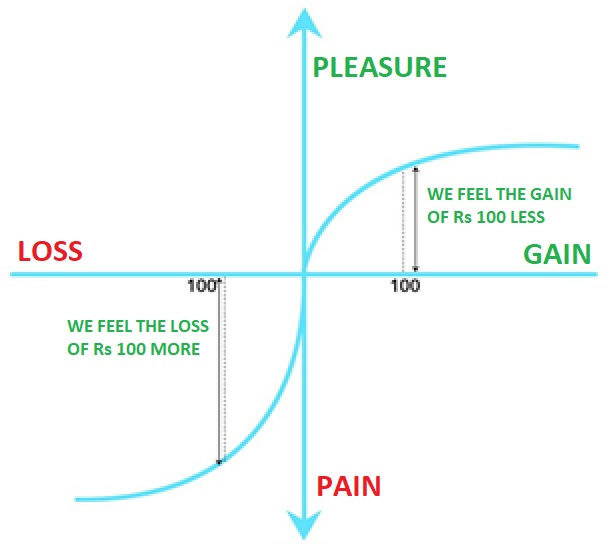
Loss Aversion: Why Losing Feels Stronger Than Gaining
Human beings are generally more motivated by the fear of losing something than by the possibility of gaining something of equal value. In other words, the pain of loss tends to hit harder than the pleasure of gain.
This is why scarcity creates such strong emotional reactions.
When something we want begins to feel unavailable—whether it is a job opportunity, relationship, discount, social approval, or limited resource—the nervous system often responds with anxiety, urgency, and heightened desire. The focus narrows. Emotions rise. Rational thinking weakens.
This is one of the psychological engines behind FOMO (Fear of Missing Out).
Often, it is not the thing itself that drives us—it is the thought that we may miss our chance.
The Psychological Roots of Scarcity
Scarcity mindset is also intensified by a few deeper psychological forces:
1) Psychological Reactance
When people feel that their freedom to choose is being restricted, they often want the restricted thing even more.
This is known as psychological reactance—the inner resistance that arises when access feels threatened. It explains why:
o a product becomes more desirable when it is “almost sold out”
o exclusivity increases appeal
o unavailable people often seem more attractive
o bans, restrictions, and “forbidden” experiences can become strangely magnetic
The mind interprets restricted access as a threat—and then starts craving what it may lose.
2) Anticipated Regret
Another force that drives scarcity-based behaviour is anticipated regret—the discomfort of imagining that we may later regret not acting now. This is what makes people think:
o “What if I miss this opportunity?”
o “What if I never get this chance again?”
o “What if I say no now and regret it later?”
That emotional forecasting can push us into rushed decisions, impulsive purchases, unhealthy attachments, and choices driven more by fear than clarity.
3) Competition Intensifies Desire
Scarcity becomes even more powerful when other people want the same thing.
The moment competition enters the picture, desire often spikes. Something feels more valuable not only because it is limited—but because others are reaching for it too. This is why:
o sold-out events feel more desirable
o popular products feel more important
o social attention feels more addictive
o emotionally unavailable people can become more compelling than available ones
When scarcity meets competition, judgment often gives way to emotion, ego, and urgency.
***To be continued in Chapter 02 (Forms of Scarcity Mindset, Instances around us, ways to identify and mitigate)
LINK TO CHAPTER - 02


Comments